headline


AA6SC and N6TOH share an Amateur Radio station on California’s high desert.


Stan Spacer

Stan’s folks homesteaded a five-acre parcel on the Mojave Desert in 1954, and built their original cabin three years later. At that time the nearest telephone was twenty-six miles away. So along with several other property owners, they became licensed CBers. But a CB radio’s range is limited. Stan and his dad decided to become licensed hams.

Together they studied, learned the Morse Code, took the FCC exam, and were licensed as Novice Class operators WN6BLK and WN6WFI. Soon Stan worked his way to an Advanced Class ticket, and with that the N became B. Along with his new privileges, Stan’s call was changed to WB6WFI. His dad quickly followed suit, and became WA6BLK.

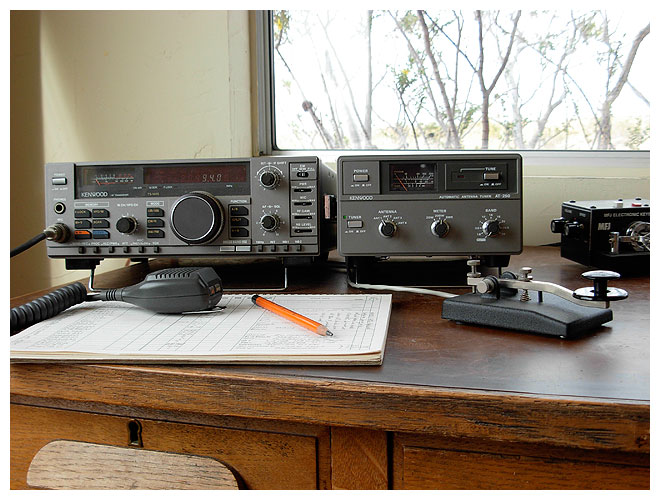
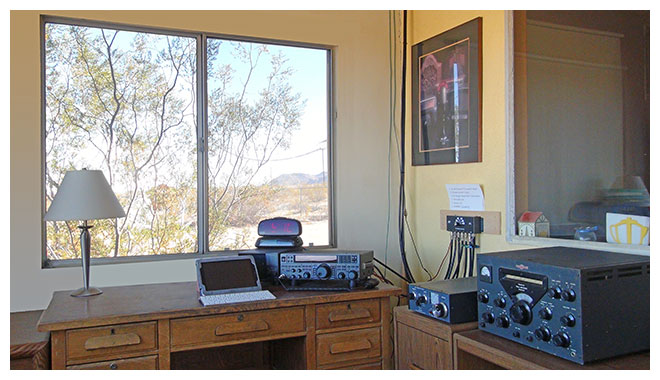
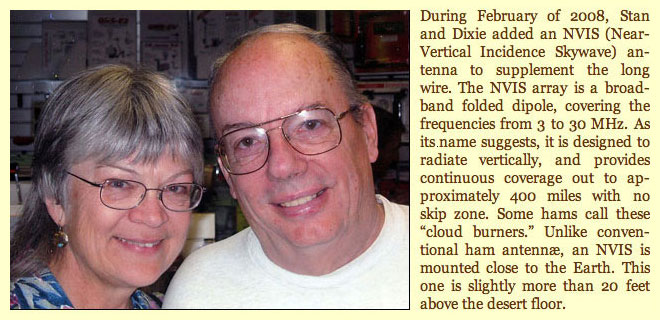
Stan’s call sign changed again in 1974 when he upgraded to Extra Class, where it remains today as AA6SC. He and Dixie were married in 1992, and she holds the call N6TOH. Together they maintain their ham station in the same desert abode that was obtained from the BLM and homesteaded by the family in 1954.

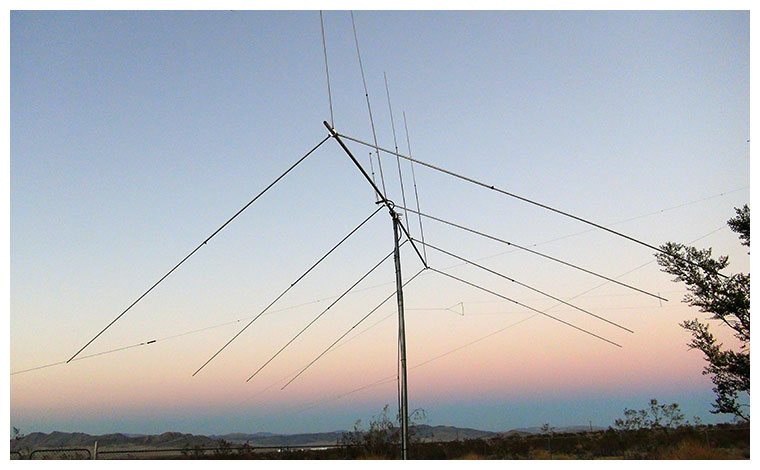
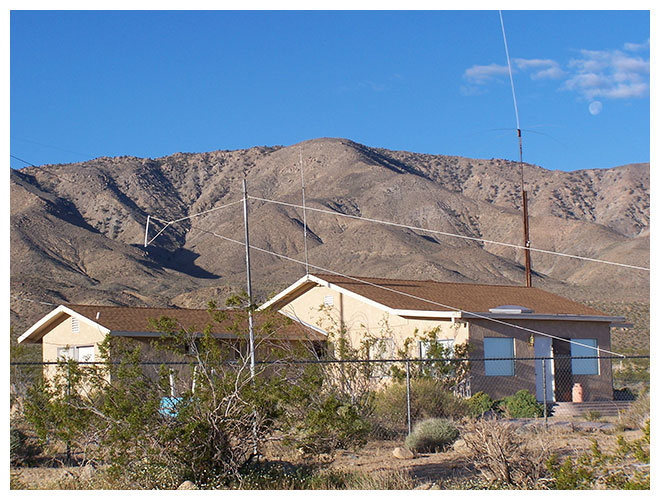
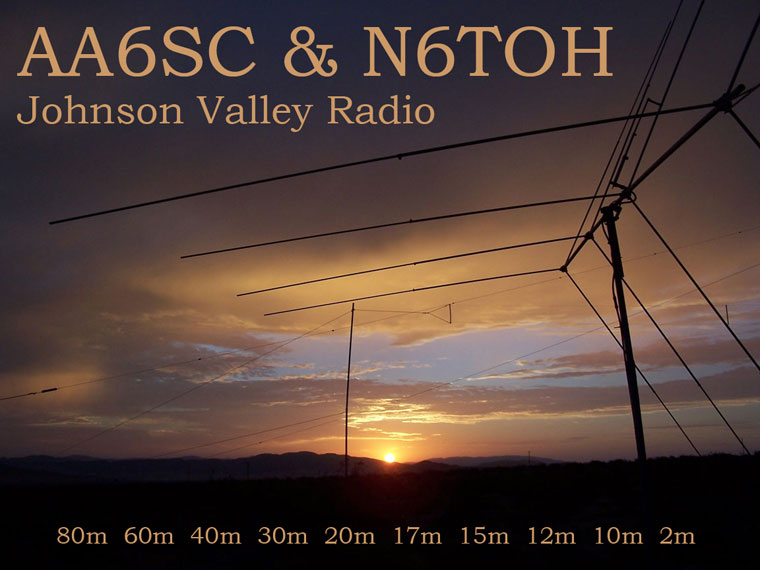
Currently they use a long wire antenna that covers the HF bands from 160 through ten meters, including the WARC bands. Desert winds can be rough on an antenna, and although at one time Stan and his dad had various mono-band dipoles, an inverted V, and even a tri-band Yagi-Uda beam, today the long wire has replaced them all.

As one might expect, the long wire is resonant at only one frequency. So Dixie and Stan use a tuner to accommodate frequency and band changes. This is a compromise in effectiveness when com­pared to more elaborate antenna arrays, but wind loading is low, and if the long wire does break or blow down, it is relatively easy to repair.

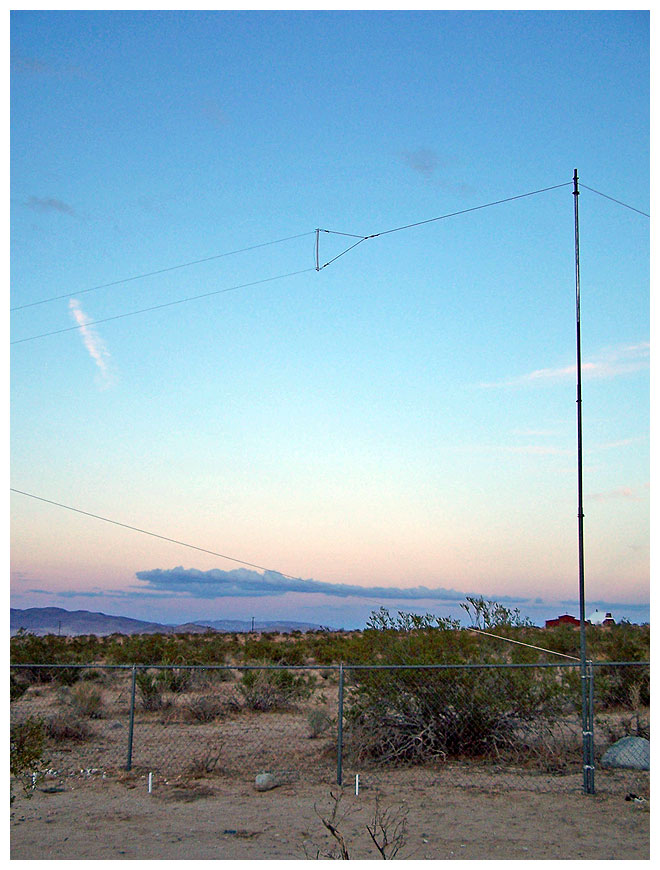
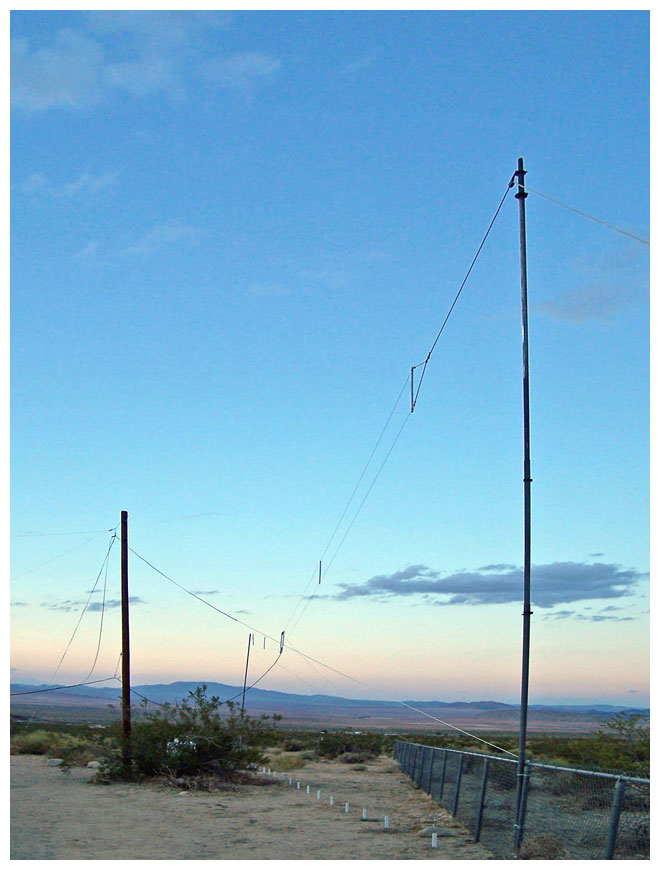
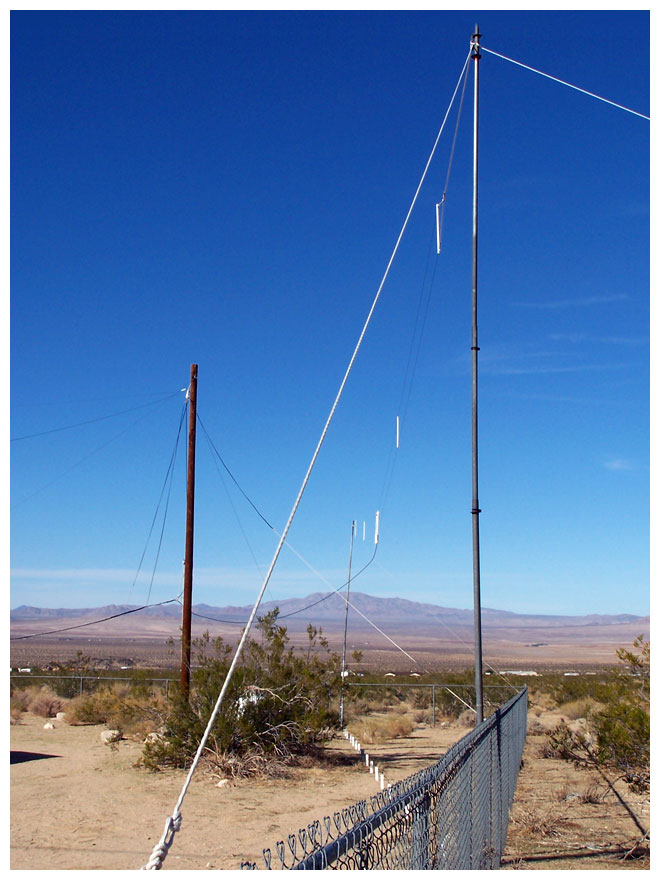
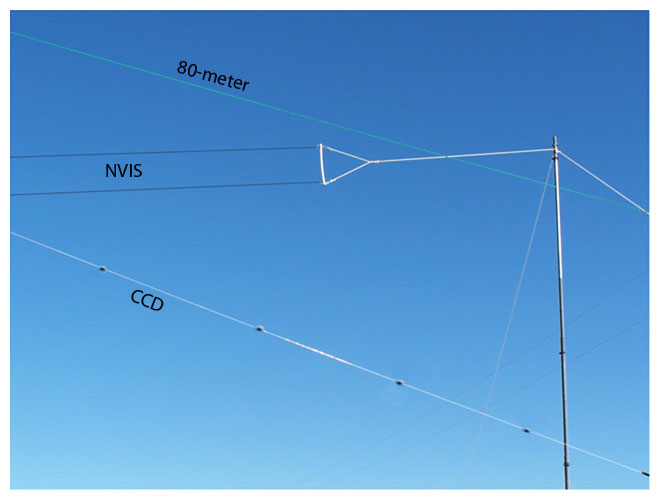
Stan and Dixie added an NVIS (Near-Vertical Incidence Skywave) antenna in February, 2008 to supplement the long wire antenna. The NVIS array is a broad-band folded dipole, covering the frequencies from 1.8 to 30 MHz. As its name suggests, it is designed to radiate vertically, and provides continuous coverage out to approximately 400 miles with no skip zone. Unlike conven­tional ham antennæ, an NVIS antenna is mounted close to the Earth.

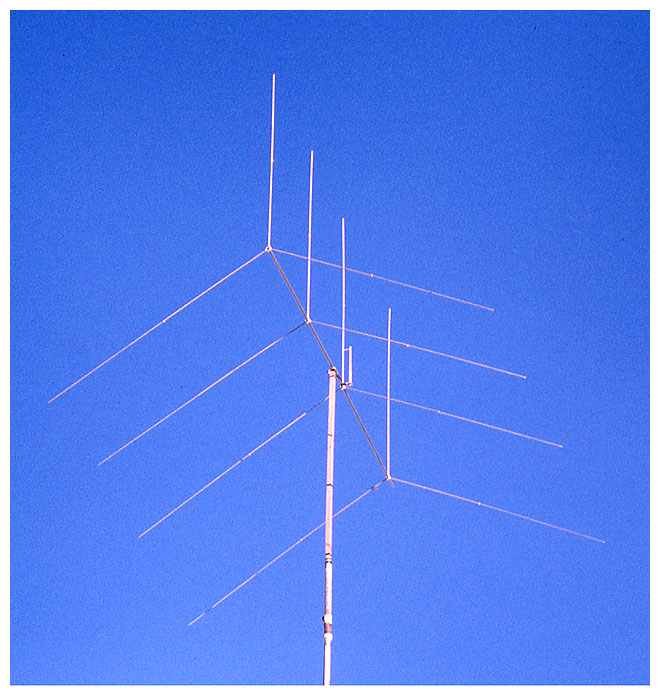
Yagi-Uda
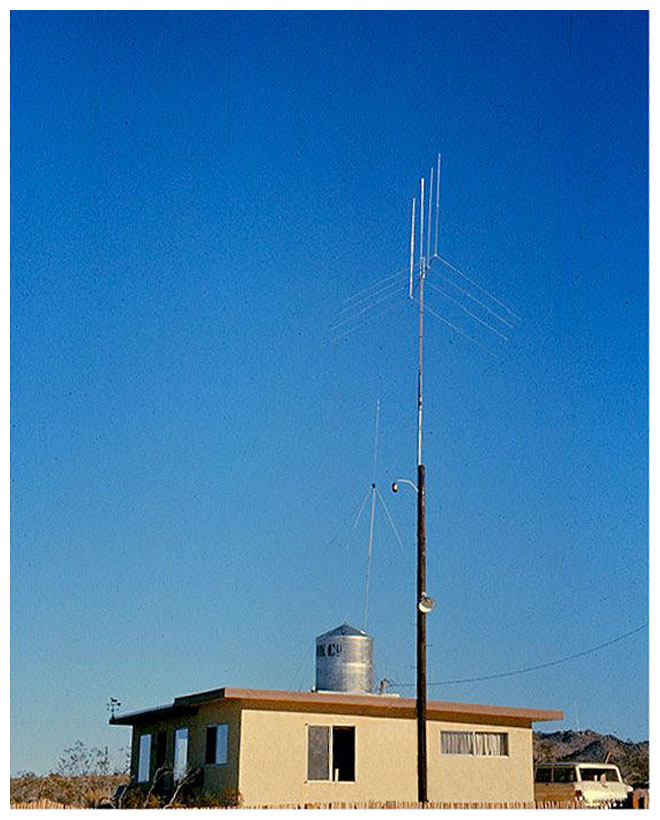
April, 1962: The west bedrooms might not have received their final coat of yellow stucco,
but a Yagi-Uda beam antenna was up for CB. Two-way radio had come to Johnson Valley.

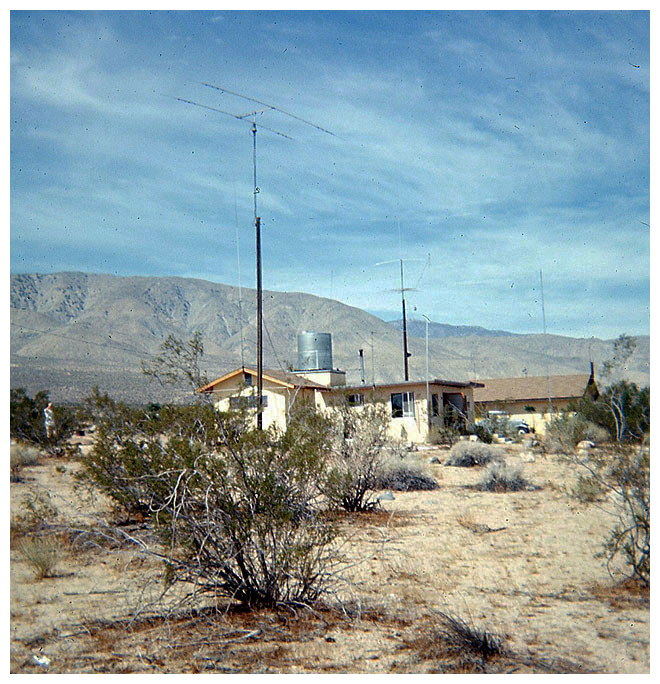
Wider view
The family owned this 1931 Model A Ford that performed well in soft sand.

Heathkits
The first Citizen’s Band equipment consisted of a pair of Heathkit transceivers. They worked well.

The Gizmotchy
A Gizmotchy antenna also was used for CB in 1962. Amateur Radio would arrive five years later.

Gizmotchy alternate
An advantage is that at the flip of a switch its polarity can be changed from vertical to horizontal.

Mud
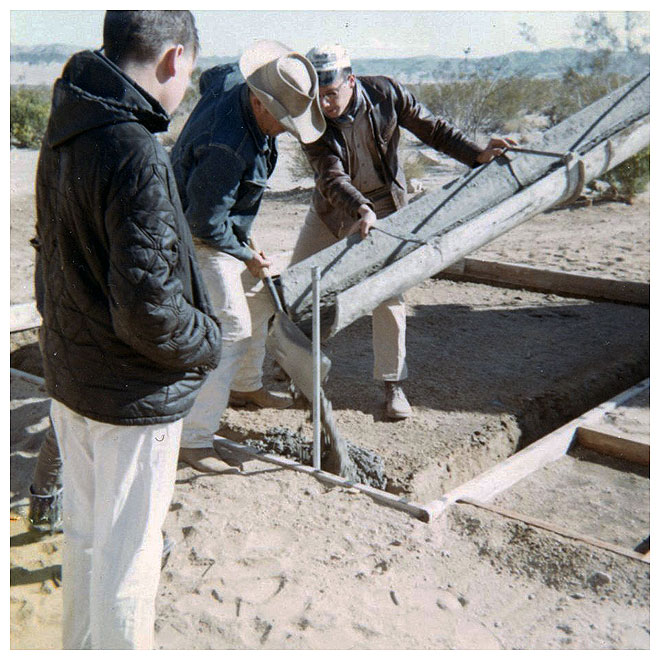
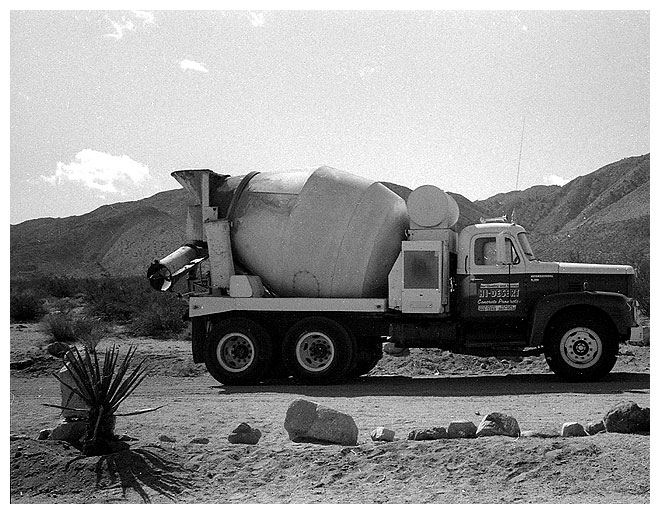
Concrete for the Ham Shack slab and walkway was delivered in March of 1967.

Trowling
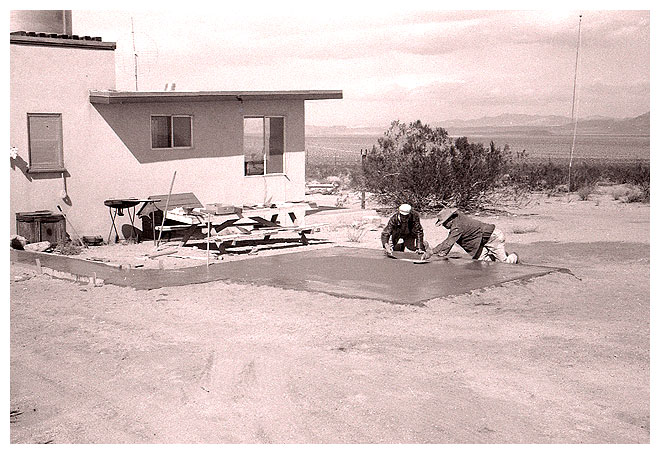
Friend and neighbor Richard DuMond and Stan troweled down the mud.

Finished
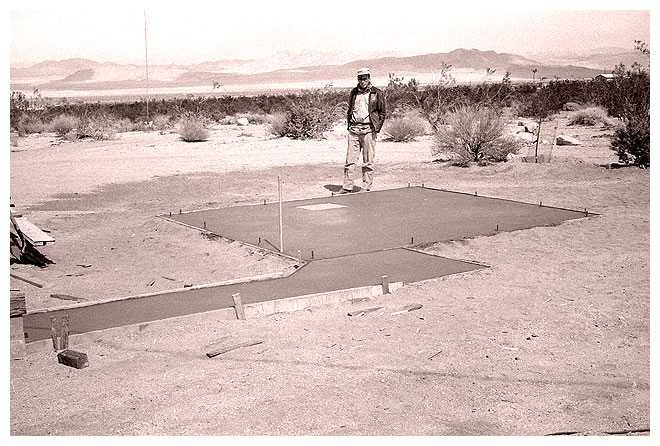
The crew relaxed for a while, but only until the concrete hardened.

Roofing
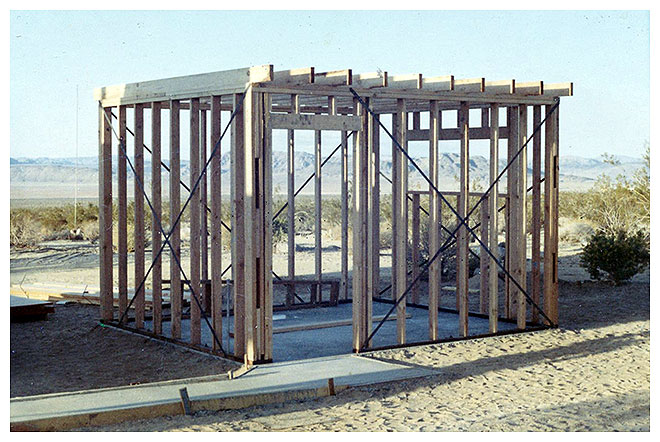
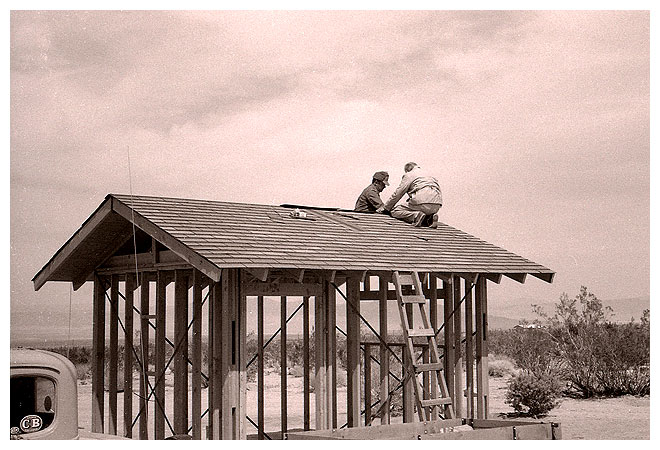
The Ham Shack was framed. Richard DuMond and Stan’s dad nailed down the shingles.

Wrapped
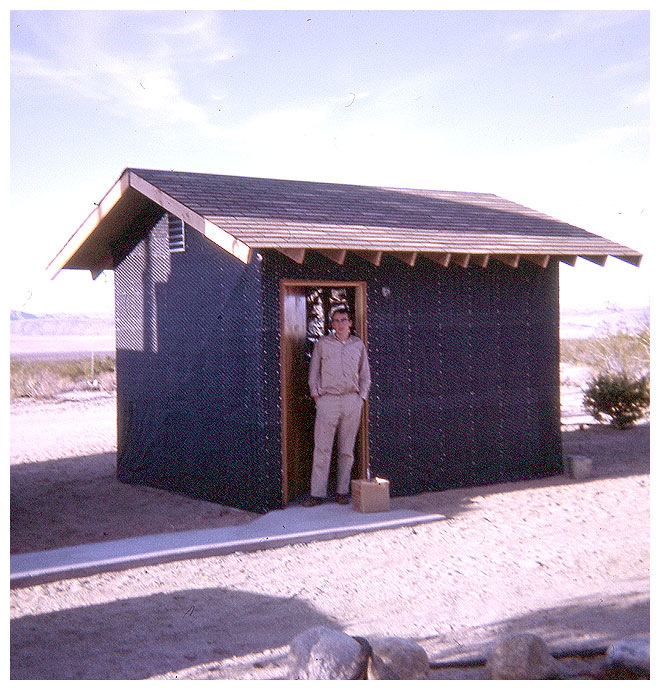
Roofed, wrapped, insulated, inspected, and readied for stucco.

Stucco
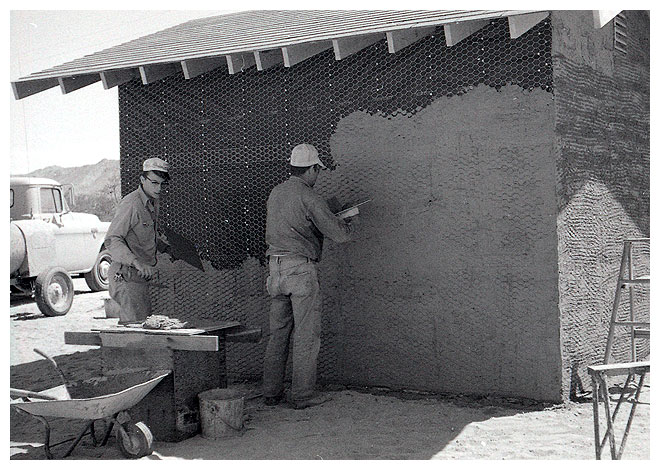
Richard and Stan applied the first coat of stucco.

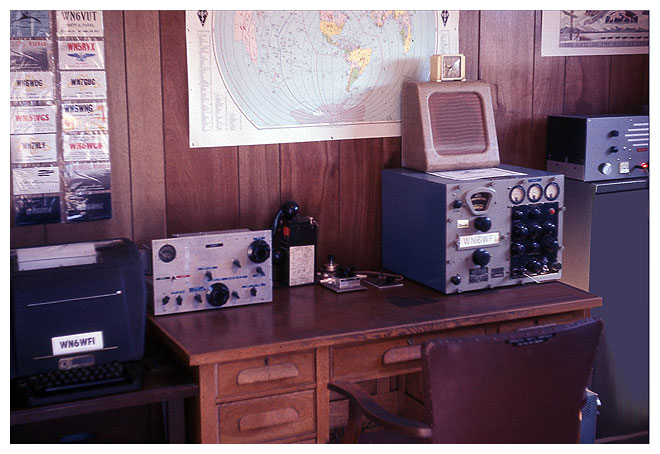
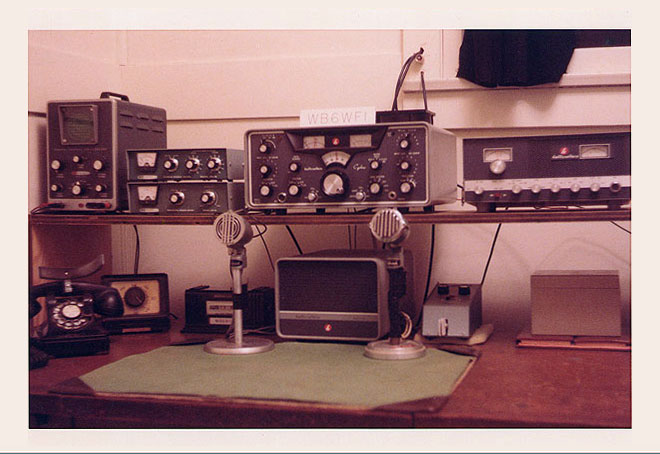
WB6WFI in the 1970s
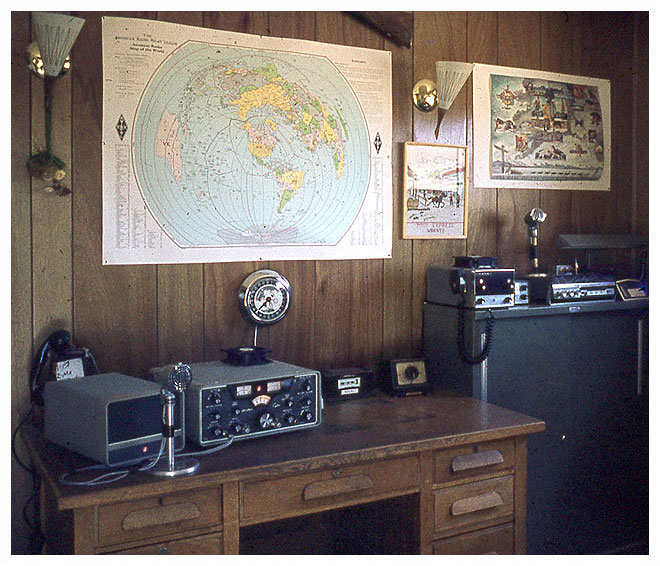
Station WB6WFI during the early 1970s. A Hallicrafters SR-42 two-meter AM rig was at the right.

Model 26
The station’s first Teletype, a surplus Model 26 that had been used by the Bell System.

Western Union Model 103
The station’s second teleprinter, a Western Union Model 103, with tape-perforating equipment.

The VHF station
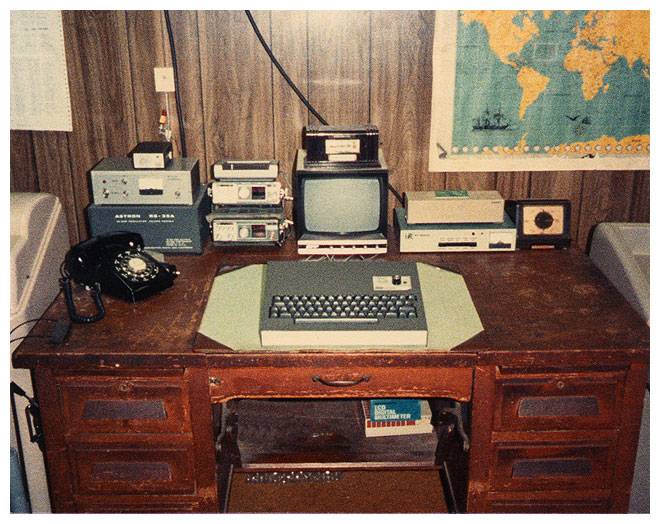
THE VHF RTTY STATION — Electronic teletext keyboards with video displays
were the beginning of the end for electromechanical teleprinter machines.

The M28ASR
M28ASR—A Model 28 Automatic Send-Receive Teletype was the station workhorse,
operating at 60 words per minute in Baudot code. This model was coveted by hams.

The M35ASR
M35ASR—Successor to the M28ASR, the Model 35 Automatic Send-Receive could run at
100 words per minute, and used the ASCII standard, which included additional characters.

Frond 2
One of Stan’s sons came into the shack to ask, “Dad, do you know you’re burning the palm tree?”

Frond 1
A frond growing large enough to contact the end of the 80-meter inverted V had not been noticed.

Novice station
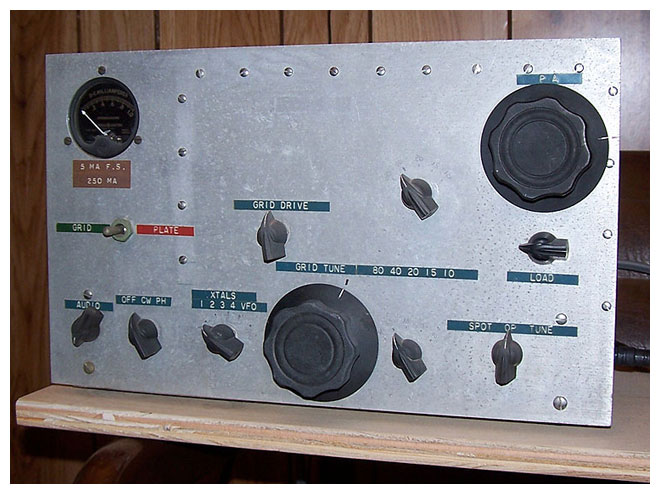
The original Novice station with the transmitter built from plans in the 1967 ARRL Handbook.

1967 homebrew transmitter
A close-up of the transmitter taken forty-three years later, in 2010.

Old equipment
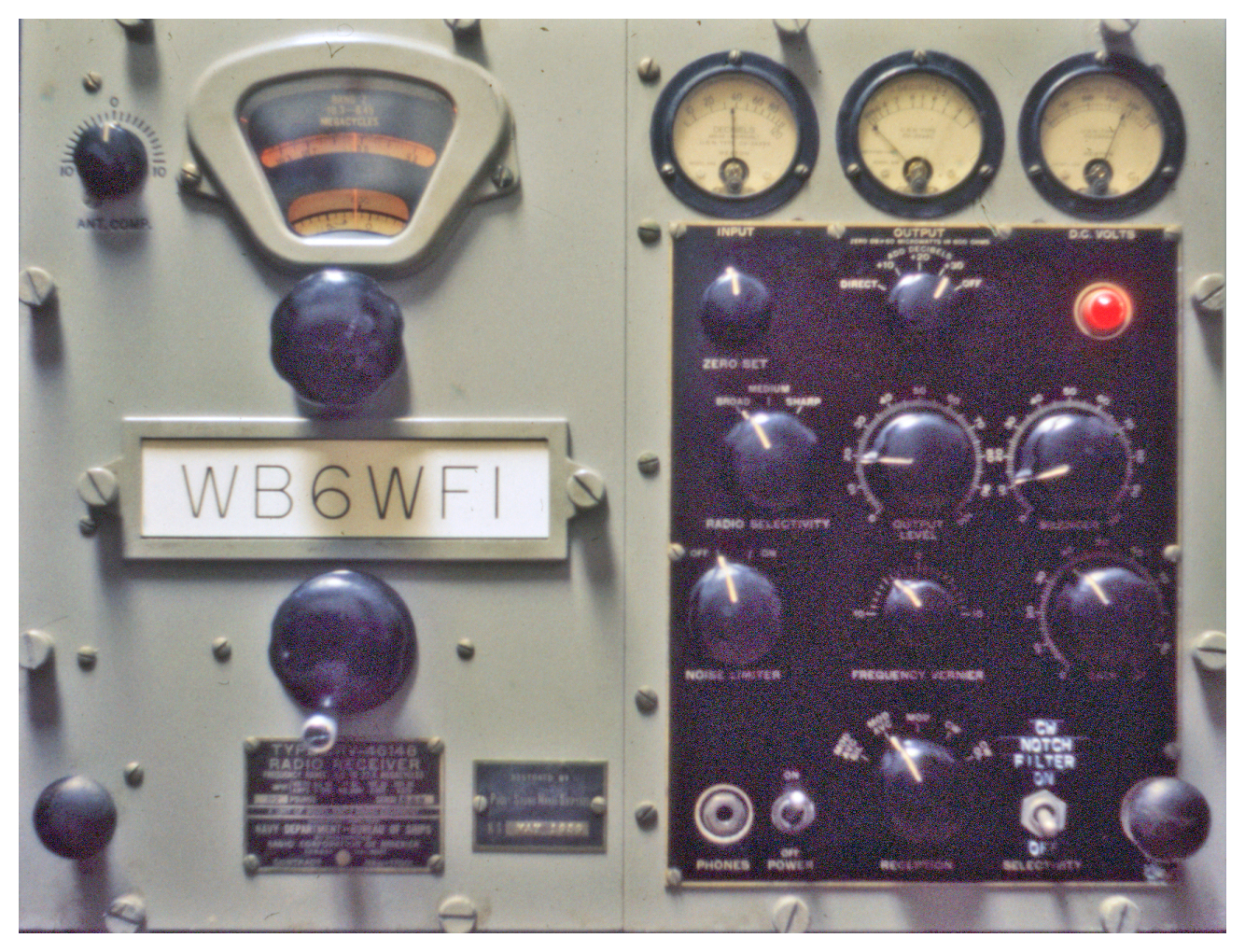
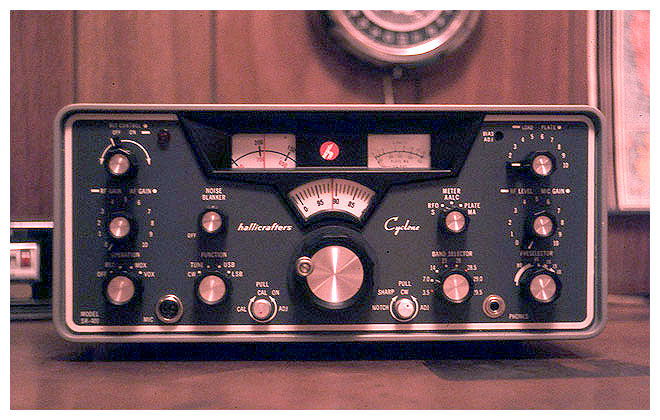
The U.S. Navy surplus RBC receiver worked well. Eventually Stan purchased a Hallicrafters
Cyclone transceiver to replace both the home-brew transmitter and the 82-pound receiver.

Desk sans RBC
CB transceivers remained in operation on the gray steel cabinet to the right. This kept us in touch with neighbors for everyone’s convenience and necessity in case of emergency. Once residential telephone service arrived in Johnson Valley during the seventies, Citizens Band was relegated almost into oblivion.

Hallicrafters CycloneThe Hallicrafters SR-400 Cyclone HF transceiver covered 80 through 10 meters.

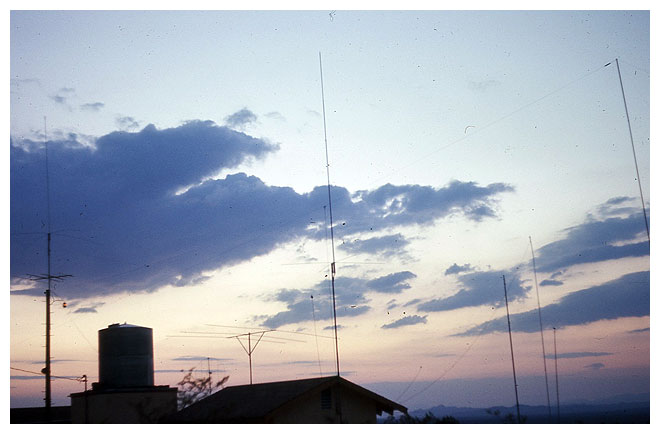
Antenna farm
It was during these years that Stan and his dad maintained an antenna farm.

Antenna farm
The Yagi beam installation took place on a memorable day, but eventually it blew down.

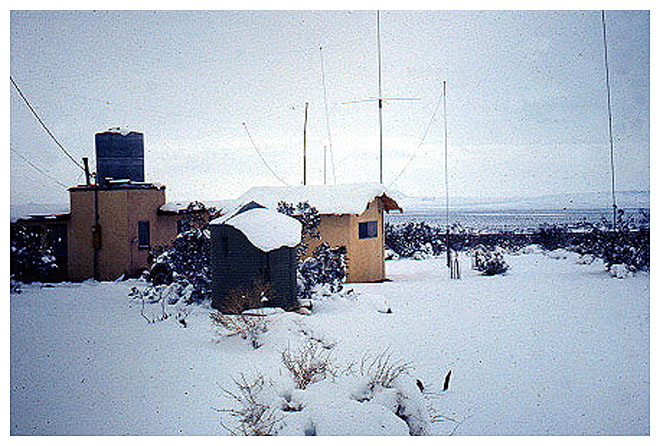
February 1968 snow
A snow fall in February of 1968.

AA6SC and N6TOH
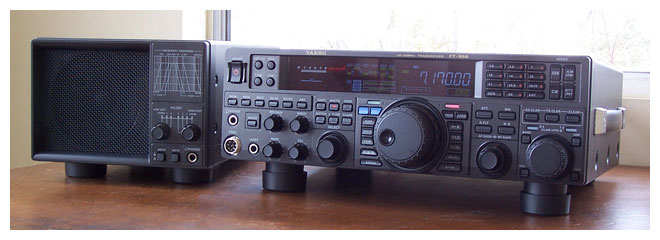
Station AA6SC/N6TOH as it is today, featuring a Yaesu FT-950.

House
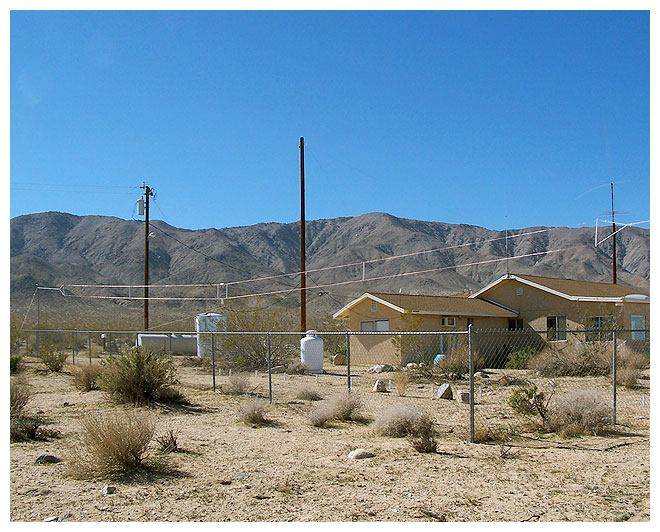
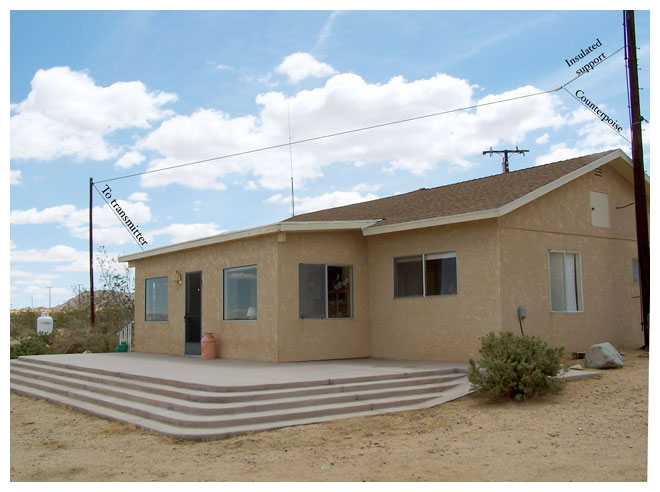
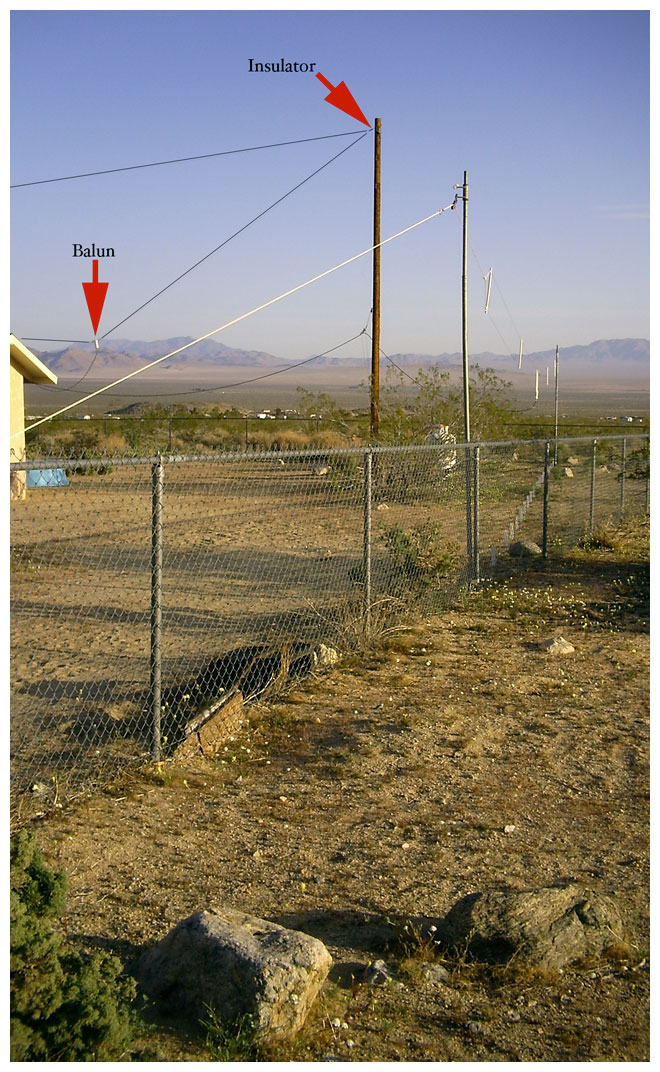
The long wire antenna, almost invisible in this photo, is suspended between the two utility poles.

Altered image
EMBELLISHED—This image has been altered in Photoshop to show the long wire’s positioning.
In reality the horizontal section sags. The two-meter Ringo Ranger can be seen near the center.

East end
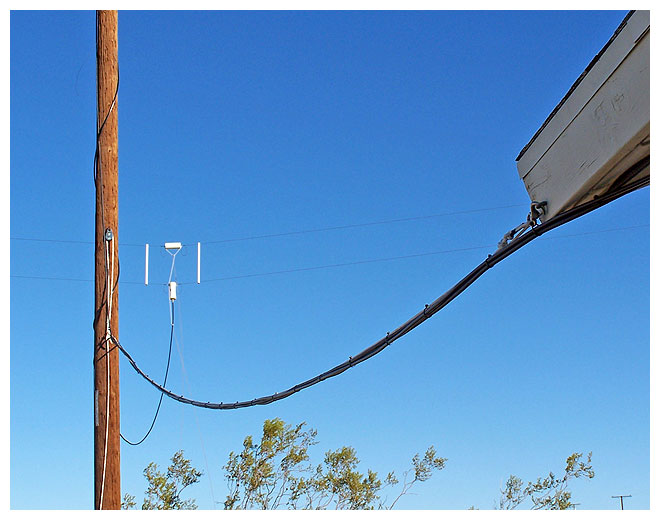
The long wire’s east end passes through an insulator at the top of the utility pole, then drops
to one terminal of a balun. The counterpoise is attached to the balun’s opposite terminal.

From the south
A view from the south showing the relative position of the longwire poles and the power pole.
View an enlarged version of this image.

The NVIS array
The new (February 2008) NVIS antenna can be seen in the foreground.
 

Content on this page requires a newer version of Adobe Flash Player.

Get Adobe Flash player